Digital and paper: does the medium matter for journaling?
What the research actually shows about handwriting versus typing, where the popular advice is overstated, and how to choose between paper and a screen for reflective writing.
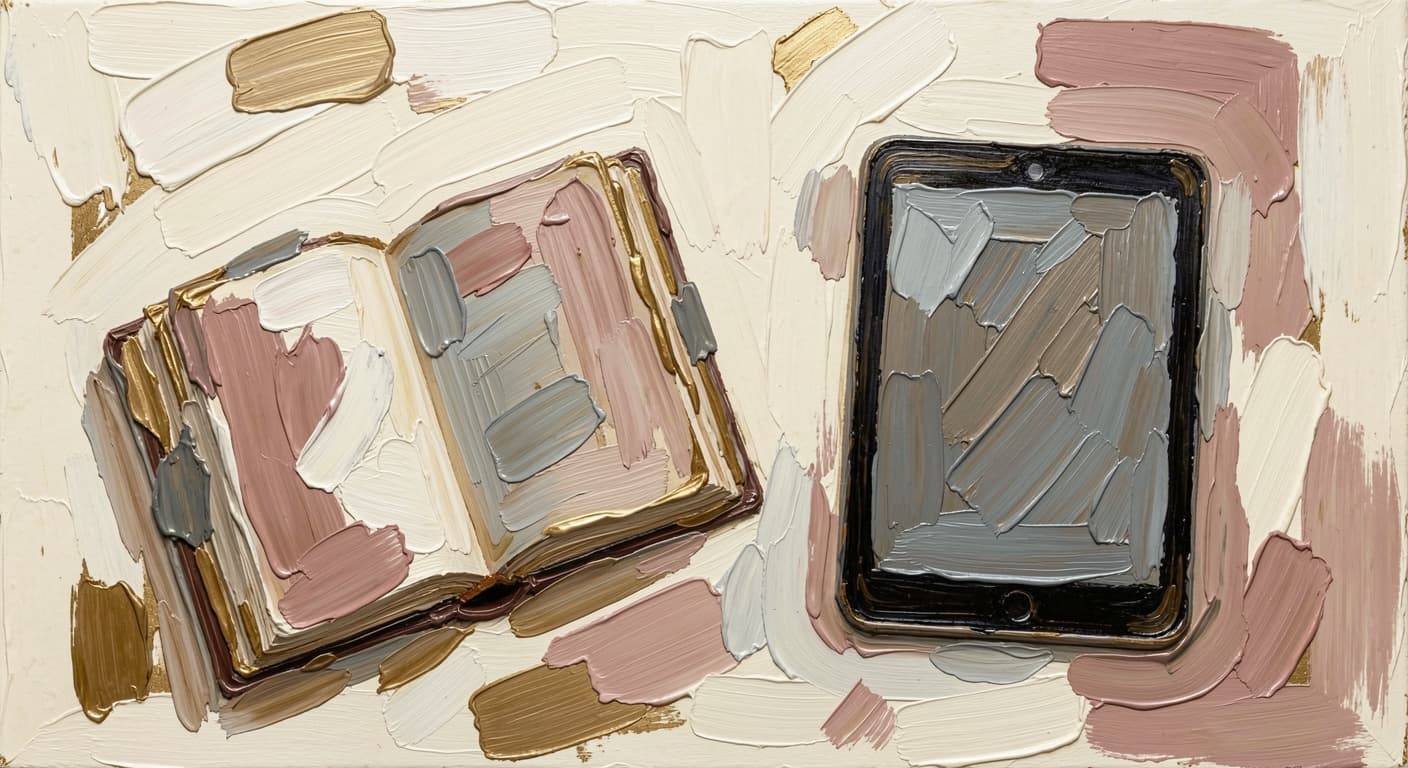
The medium question is one of the most-litigated topics in journaling discourse. Paper is better; you must write by hand. Digital is fine; medium doesn't matter. Handwriting changes the brain. Most of these claims are stated more confidently than the underlying evidence supports. The honest version is narrower and less prescriptive: medium matters somewhat, in specific ways, and the strongest predictor of whether your journaling works is whether you actually do it — not which tool you do it on.
What the research has tried to show
The most-cited paper claiming a handwriting advantage is Mueller and Oppenheimer's 2014 study on note-taking during lectures, which found that students who took notes by hand later performed better on conceptual recall than students who typed verbatim. The paper became a touchstone for the handwriting is better for thinking claim across many domains, including journaling.
The replication record is notably mixed. Subsequent studies, including pre-registered replication attempts, have not consistently found the same handwriting advantage. The original effect appears to have been smaller than the popular distillation suggested, and partly contingent on specific instruction conditions in the original study (verbatim-typing vs. summarizing-typing). For journaling specifically — which is generative writing, not transcription of someone else's content — the original finding is even less directly applicable.
The Pennebaker expressive-writing literature (covered in the Pennebaker research post) is the more relevant body of work. Across 146 studies in Frattaroli's 2006 meta-analysis, the medium of writing was not a substantial moderator of the effect. Hand and electronic writing produced roughly comparable benefits. What mattered was the structure of the practice (emotionally meaningful content, multiple sessions, time between sessions), not the input device.
The honest summary: there is no robust evidence that writing journaling sessions by hand produces meaningfully different reflective outcomes than typing them. Medium-related effects exist but are small relative to the much larger effects of whether you do the practice at all and how well-structured the sessions are.
What the medium difference actually is
This doesn't mean the choice is trivial. Three real differences:
Speed of capture. Typing is faster than handwriting for most people. For some kinds of writing, speed is helpful (clearing a backlog of mental clutter, capturing a flow of ideas before they evaporate). For other kinds, speed is harmful (the slowing that writing forces is part of what produces the cognitive benefit). The choice depends on what kind of session you're trying to have.
Friction and access. Paper requires having the notebook with you, finding a pen, sitting somewhere to write. Digital is essentially always available. The friction can go either way: paper's higher friction often produces fewer but more deliberate sessions; digital's lower friction often produces more sessions of lower quality. For some practitioners the deliberateness of paper is the practice; for others the always-availability of digital keeps the practice alive in ways paper wouldn't.
Privacy and impermanence. Paper journals can be physically destroyed, kept in a drawer, or passed down. Digital journals exist on devices that are scanned, indexed, and sometimes synced to clouds you don't fully control. The privacy implications are different in kind, not just in degree. For journaling that touches sensitive material, the medium choice has security consequences that have nothing to do with cognitive effects.
These three real differences swamp any small handwriting-vs-typing cognitive effect. The question is not which medium is better for thinking? It is which medium fits the practice you actually want to have?
A practical heuristic
If you're starting and don't yet have a strong preference: start with paper. Not because the research demands it, but because the higher friction tends to produce more deliberate sessions, which is what new journalers most need. Once the habit of actually doing the practice is stable, switching to digital doesn't change the cognitive output much.
If you've been journaling on paper and the practice is fading: try digital for a month. The friction reduction often restarts a stalled practice. The friction itself was the problem, not the digital nature of the alternative.
If you've been journaling digitally and the sessions feel rushed or surface: try paper for a month. The slowing handwriting forces is sometimes the intervention.
If you keep switching between media trying to find the right one: the medium is not the problem. Stop switching. Pick one and stay with it for ninety days. The variance you're getting between media is smaller than the variance you'd get from two months of consistent practice on either.
What's worth keeping from the popular advice
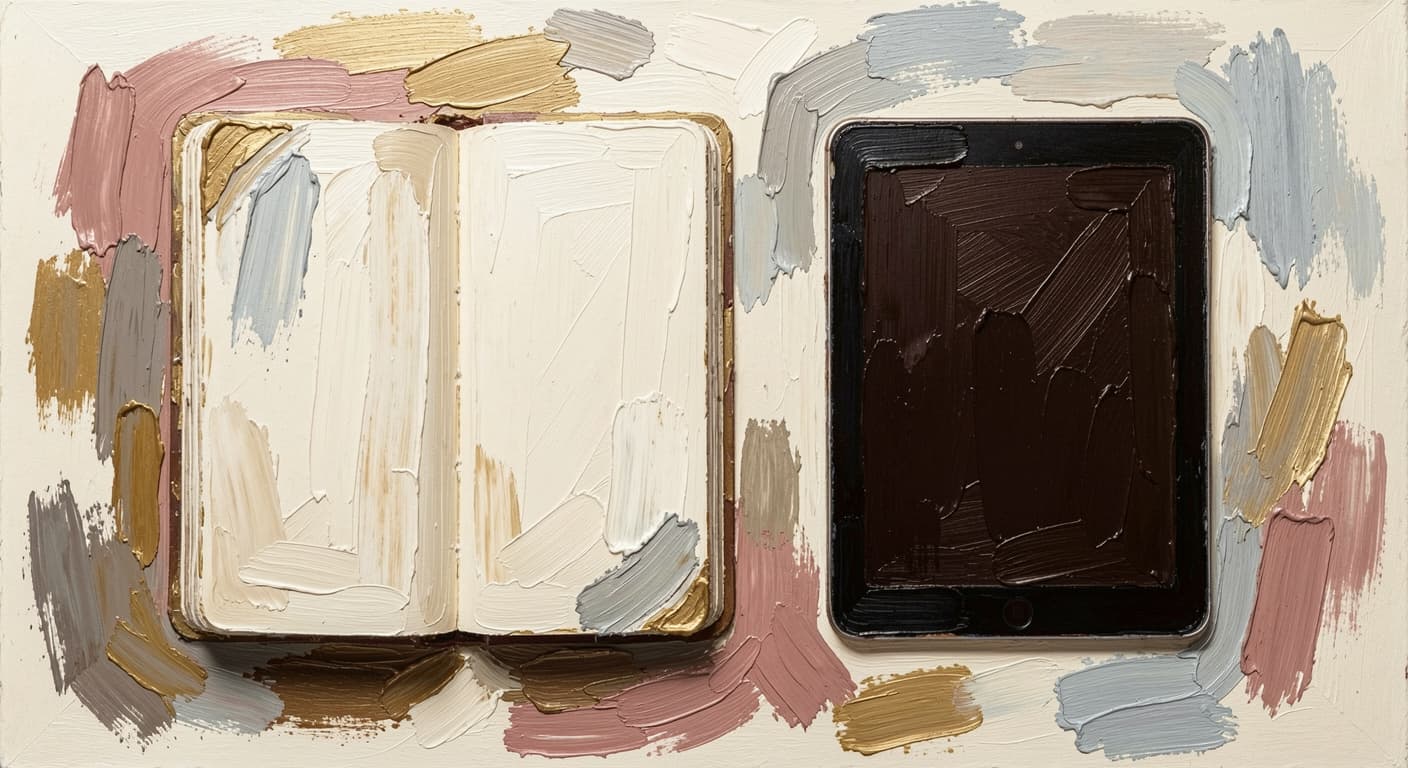
The popular advice has one piece of underrated counsel: write something on the page even when you don't know what to write. This applies on paper or screen and is much more important than the medium choice. The session that happens, in any medium, beats the session that doesn't happen on the best medium. One real consideration the medium debate often overlooks is privacy — see journaling without privacy for the specific workarounds when paper-in-a-shared-house isn't safe and a passphrased digital tool is.
If you want a structured form of session that works on either medium, Mirror Field holds the frame the same way regardless of the device you're writing on.
Sources
- Frattaroli, J. (2006). Experimental disclosure and its moderators: A meta-analysis. Psychological Bulletin, 132(6), 823–865. https://doi.org/10.1037/0033-2909.132.6.823
You may like
The voice you use about yourself
First person, second person, or third — the grammatical voice you use when writing about yourself shapes what the page can do. What the research shows, and the deliberate use of self-distance.
Journaling for grief
What journaling can and can't do for grief, why the popular guides oversell it, and a practical pattern grounded in the dual-process model of bereavement.
Self-journaling, end to end
What self-journaling is for, what the research has actually shown, the shape of a useful session, and how to tell when the practice has stopped working.