Sleeping on it: what the research actually says
The popular advice to sleep on a hard decision rests on a research claim that has not aged well. What's actually known, what was overstated, and when the practice still helps.
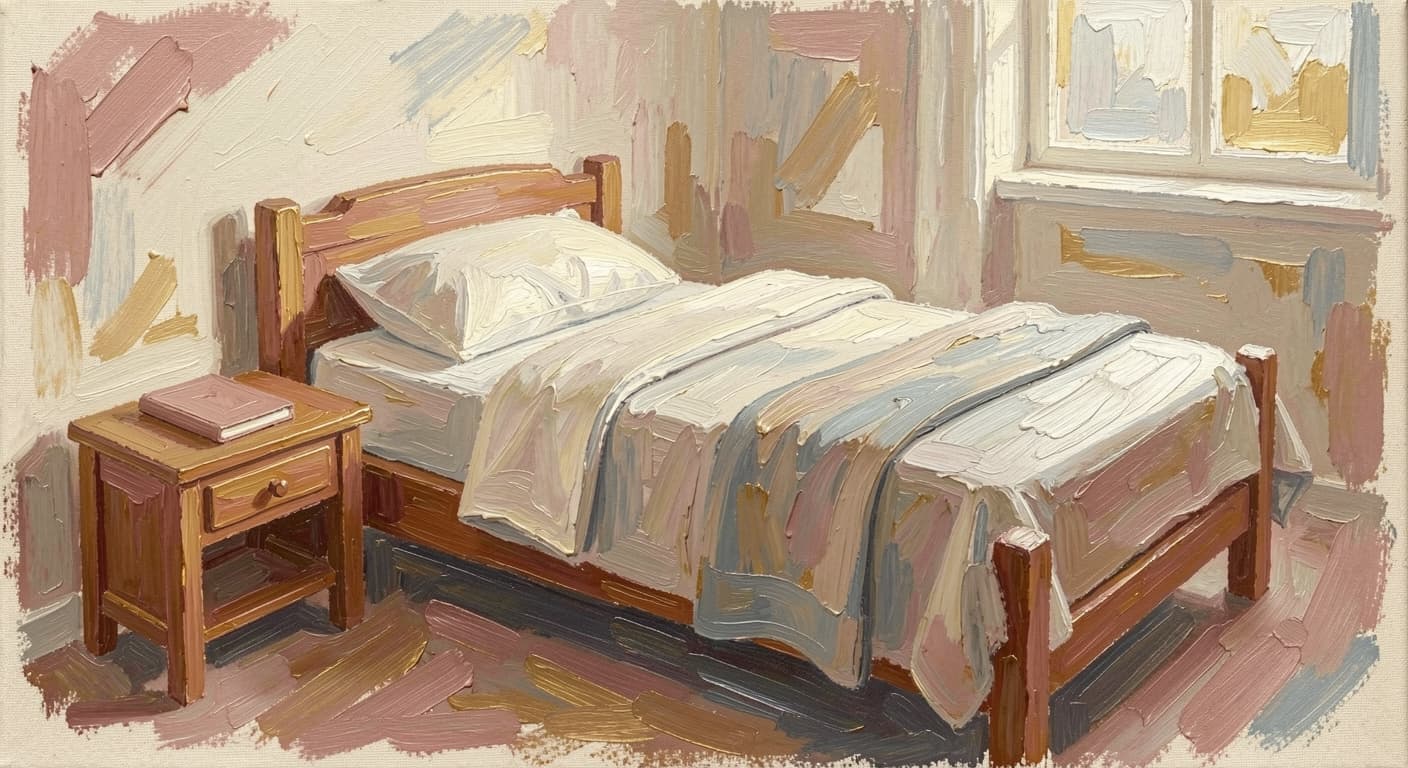
The advice to sleep on it before a hard decision is one of the most widely repeated pieces of decision-making folk wisdom. The popular version usually invokes a research finding: that the unconscious mind, given a night to work, produces better decisions than the conscious mind grinding away in real time. The finding is real. The story it became is largely wrong. The practice still has value, but for different reasons than the popular account claims.
Where the popular claim came from
The original research that launched the sleep on it discourse was a series of experiments by Ap Dijksterhuis and colleagues in the early 2000s. The headline paper, Dijksterhuis (2004) in the Journal of Personality and Social Psychology, argued for what came to be called unconscious thought theory (UTT): for complex decisions involving many attributes, distracted or unconscious thought outperformed both immediate decisions and conscious deliberation.
The findings were striking, the framing was memorable, and the popular press picked up the implication immediately. Don't deliberate consciously on hard decisions; let your unconscious work on them while you do something else, ideally sleep on them. The advice spread fast and entered the mainstream of decision-making writing. It still appears in productivity books and TED talks today.
What happened to the claim
The replication record is bad.
A long line of follow-up studies, including pre-registered attempts to reproduce the original effects, failed to find the unconscious-thought advantage that Dijksterhuis reported. The most thorough critical review is Newell and Shanks (2014), in Behavioral and Brain Sciences, which examined the entire UTT literature and concluded that the evidence for unconscious decision-making advantages was weak, the methodologies were often confounded, and the popular implications were not supported by the underlying data. Subsequent meta-analyses and large pre-registered replications have largely confirmed this critical view.
The current best read of the literature: there is no robust evidence that unconscious deliberation during a delay produces better decisions than well-conducted conscious deliberation. The original finding appears to have been a combination of small effects, methodological flexibility, and a framing that aligned with what people wanted to believe.
Why the practice still helps (different reasons)
The popular advice survives the death of its original research justification, because it works for reasons the original framing didn't emphasize.
Emotional intensity drops. Decisions made in the high arousal of a moment narrow attention to the most salient feature of the situation. A night's sleep brings arousal down to a level where the rest of the situation is visible again. The decision the next morning is not better because your unconscious worked on it; it's better because your conscious mind is no longer locked into a single dimension.
Sleep itself supports memory consolidation. Sleep — especially slow-wave and REM phases — plays a documented role in consolidating recent learning into longer-term memory. A complex decision often depends on relevant material that hasn't fully settled. Sleeping with the question lets the relevant memories integrate, so that when you re-approach the decision, you have access to material that was, the night before, still loose.
Time changes the framing. The version of the decision you face today is not always the version you faced yesterday. Some decisions resolve themselves overnight not because anything internal happened but because the external situation shifted, you got more information, or what felt urgent stops feeling urgent. Sleeping on it gives the situation room to declare itself.
You stop forcing. Continuing to deliberate past the point of useful return is one of the failure modes covered in overthinking. Sleep is one way to step out of the loop. The benefit isn't unconscious processing; it's the interruption of conscious over-processing.
When sleeping on it doesn't help
Two cases.
Time-pressured decisions. Brake or coast. Speak now or stay silent. Send the email today or lose the opportunity. The pause that sleep enforces is a luxury some situations don't allow. Forcing a delay where the situation requires action produces worse decisions than acting promptly with the information available.
Decisions you've already adequately seen. If the decision has been pending for two weeks and you keep finding new edges to it each day, another night isn't going to add anything. At some point, more time becomes another form of postponement. The honest move is to decide.
A practical version

For a hard decision in front of you today, try this order: deliberate enough to map the decision (what's the situation, what are the options, what would change the answer). If a clear answer emerges, take it. If it doesn't, stop deliberating, sleep, and look again in the morning. Don't continue to think about the decision in the evening; let it go. In the morning, before re-entering deliberation, ask one question: what does this look like now?
Sometimes the answer is obvious. Sometimes the situation is genuinely the same and you have to decide anyway. Either is useful information.
If you'd like a structured way to look at the decision in the morning, a Mirror Field session is built for this.
Sources
- Dijksterhuis, A. (2004). Think different: The merits of unconscious thought in preference development and decision making. Journal of Personality and Social Psychology, 87(5), 586–598. https://doi.org/10.1037/0022-3514.87.5.586
- Newell, B. R., & Shanks, D. R. (2014). Unconscious influences on decision making: A critical review. Behavioral and Brain Sciences, 37(1), 1–19. https://doi.org/10.1017/S0140525X12003214
You may like
Decision regret vs. decision quality
A decision can be high-quality and produce regret, or low-quality and produce relief. Why the two come apart, and what to actually evaluate when reviewing a choice.

How people actually decide
How people actually decide, what the research has found, and why most decision-making frameworks oversell what reflection can do for hard choices.
Reflective decisions vs. reactive decisions
When the pause helps and when it hurts: how reflective and reactive decisions differ, what the research says, and a working test for which mode fits the moment.