The first-page problem
Why a brand-new notebook stalls more often than it inspires, what the blank-first-page anxiety actually is, and the small practical move that resolves it.
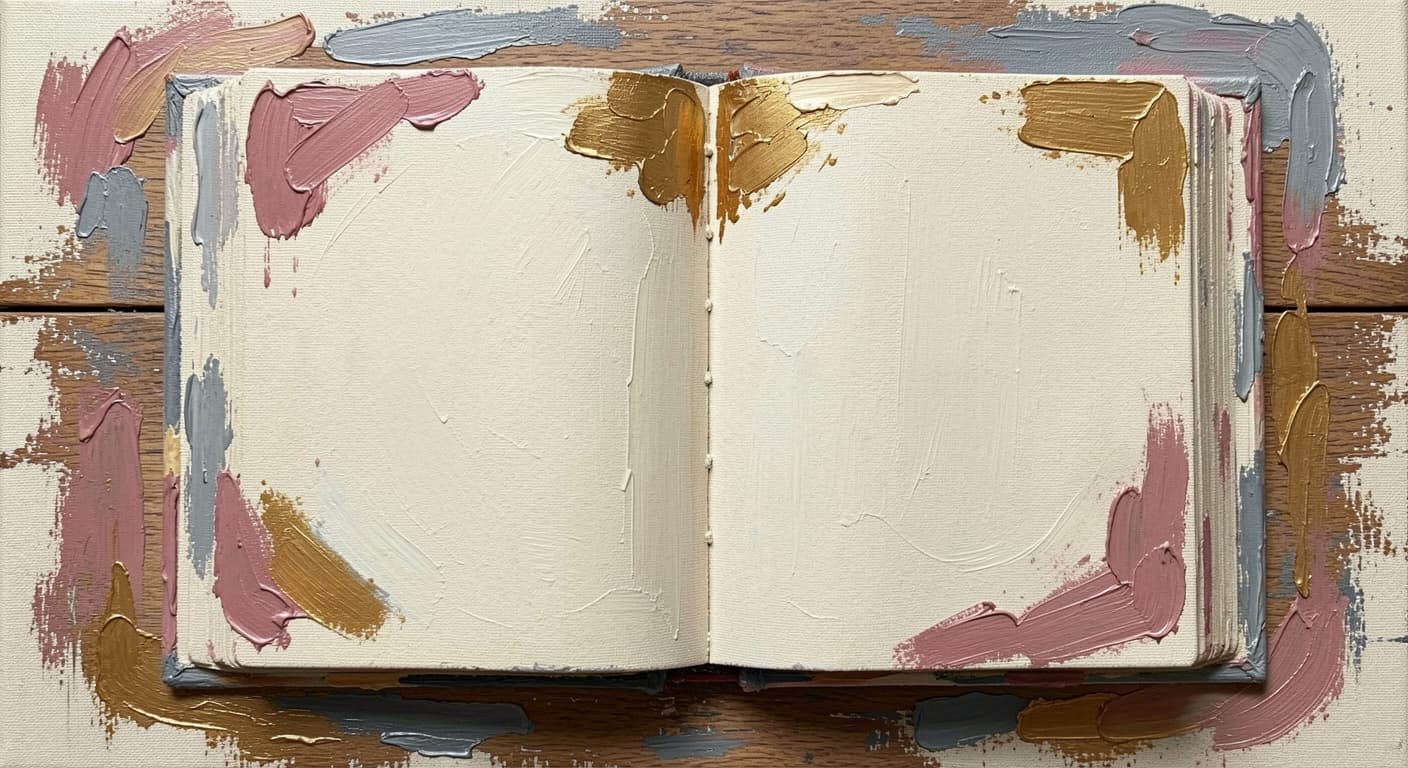
A new notebook is supposed to be the easy part. You buy it, open it, write. In practice the first page is where many journaling practices stall before they begin. The notebook sits unopened on a shelf for a week, then a month. When you finally open it, you write a sentence, dislike it, close the book, and don't return for another two weeks. The problem is not motivation. It is the structural weight that the first page carries, and the way that weight tricks you into treating it like a performance.
What the anxiety actually is
The first page sets the precedent. Whatever you write there feels like it has to match the notebook — its quality, its hopefulness, the version of yourself who bought it. People who would never struggle to write a midpoint entry in a half-full notebook can stare at a blank first page for an hour.
Three specific pressures pile up on it:
The aesthetic pressure. A clean unmarked book invites neat handwriting, a date, an opening declaration. None of those are how reflective writing actually works in practice.
The summary pressure. I should explain why I started this notebook. This produces an opening that reads like the foreword to a book nobody is reading.
The future-reader pressure. A vague sense that someone — your future self, an imaginary biographer — will start reading from page one, and that they need to be oriented. They don't. Real rereading skips around.
Each of those pressures is fine in isolation. Stacked together on one page, they produce a paralysis that is mistaken for low motivation.
The structural fix
The first-page problem dissolves if the first page isn't the first entry.
Two practical moves:
Use the first page as a sacrificial page. Write something on it that you do not consider an entry. A list of pens you like, a smudged date, a quote, the address of a coffee shop you wrote in. The page now exists. The next page can be the first real entry, and the precedent has been broken without ceremony.
Or open to the middle and start there. Pick a page roughly halfway through the notebook and begin. Treat the front and back as territories you'll fill in if and when you fill them. Most reflective practice does not benefit from chronological-first ordering anyway.
Either move replaces the implicit rule the first page must be worthy of the notebook with a practical fact: the first page is just where this object started.
The deeper problem this points at
The first-page problem is one instance of a more general pattern in reflective practice: the more weight you put on the writing being good, the less the writing does what it's for. Reflective writing earns its value by being honest at the sentence level, not by being shaped at the page level. A blank first page subtly cues the page-level mode, which is the wrong mode for the work the notebook is supposed to do.
If you find yourself stalling regularly at session-start — even when the notebook is no longer new — the same pattern is in play at smaller scale. The first sentence of a session can become its own first page. The fix is structurally the same: write a throwaway sentence first. Today is Tuesday. I'm tired. I don't know what to write yet. The page now exists. The next sentence is the first real one.
If you want a structured opening that bypasses the blank-page stall entirely, a Mirror Field session starts with three classical symbols already cast and a returned question to write toward.
The notebook isn't the practice
It is easy to confuse buying a beautiful notebook with starting a practice. They are not the same. People with five untouched notebooks often have, somewhere in a drawer, a bent legal pad with months of useful writing on it. The legal pad is the practice. The notebooks are an aspiration.
The fix here is not to buy a less beautiful notebook. The fix is to deflate the first page so the notebook becomes a working object instead of an aspirational one. Working objects get written in. Aspirational ones sit on shelves.
A small exercise
Take the unwritten notebook closest to you. Open to the first page. Write the date and one sentence about what you ate this morning. Close the notebook. The first page is now used. The next time you open the book, start in the middle and don't think about the front.
The point isn't the breakfast sentence. The point is that the precedent has been set at the lowest possible stake, and the rest of the notebook is now just paper.
You may like
Journaling through transitions
Why reflective writing during a job change, move, or relationship ending has a different shape than ordinary practice, and what each phase of a transition asks for on the page.
Journaling without privacy
What to do when you don't have a private place to keep a journal — shared homes, traveling, partners who read each other's things. The practical workarounds and what each costs.
Leaving sessions unfinished, on purpose
Most journaling guides assume a session has a tidy ending. Stopping mid-thought, deliberately, is a different practice with its own logic — and one that produces better next sessions.