Power 2: Sorrow to Joy
The second of the ten Hermetic powers in CH XIII drives out sorrow. What the dialogue means by *Knowledge of Joy* — and why it isn't what the modern wellness vocabulary calls happiness.
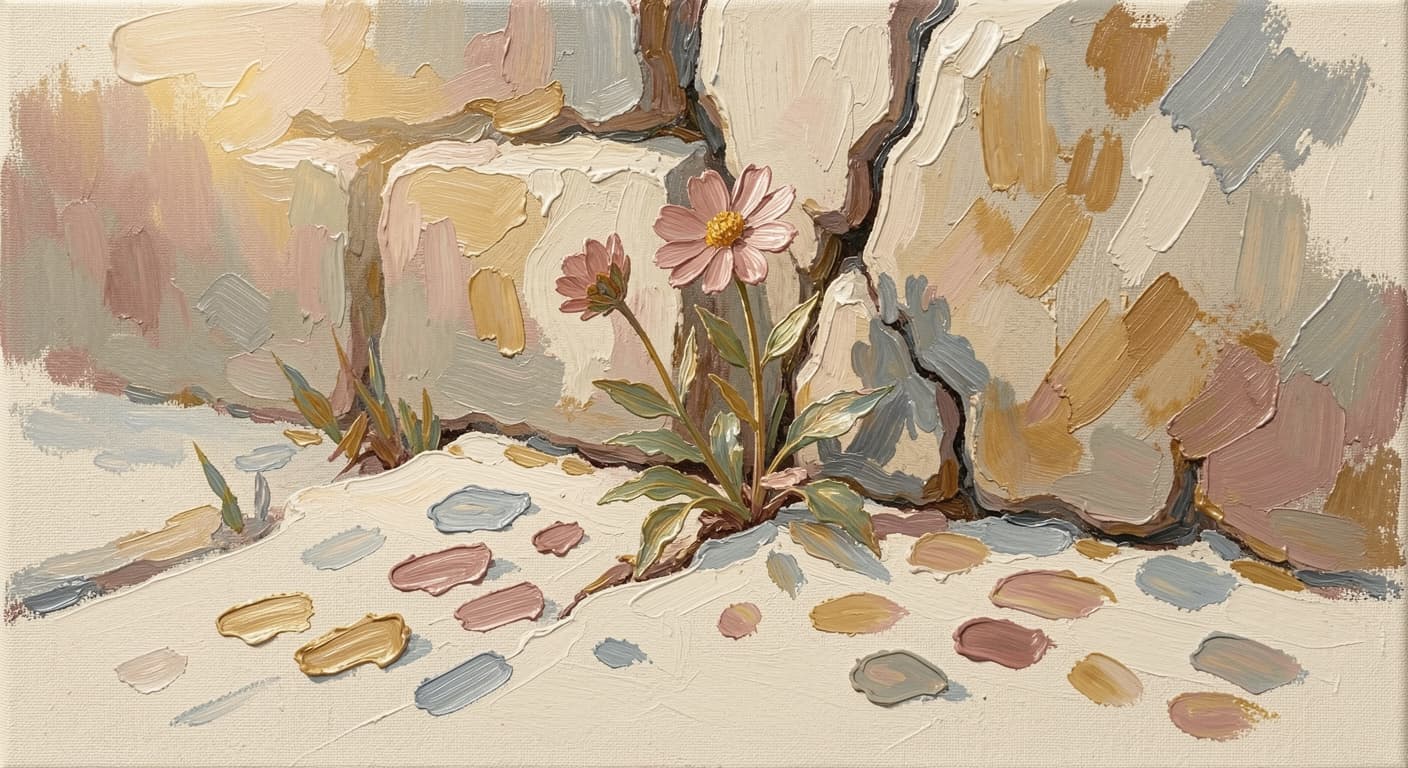
The second of the ten Hermetic powers is named in Corpus Hermeticum XIII as Knowledge of Joy, displacing the tormentor of sorrow. The phrase is unusual in Greek philosophical writing — it is gnōsis charas, the recognition of joy, not the pursuit of it — and the unusualness is the whole point.
What the dialogue means by joy is not what the modern wellness vocabulary calls happiness, mood, or positive affect. It is closer to a structural recognition: the seeing that joy was already an available register of the situation, regardless of the situation's difficulty. This is a distinct claim, and a more usable one than the popular flattening.
What the dialogue means by joy
In the Hermetic frame, joy (chara, χαρά) is a property of the cosmos and of the divine, not primarily of the individual's emotional state. Knowledge of Joy names the recognition that this property is present even in moments where one's affective experience is sorrow. The two are not opposed in the way happy and sad are opposed in modern psychology. They are layered. One is a recognition of how things are; the other is the texture of how they feel.
This sounds abstract. The concrete version is recognizable: the moments in which something difficult is happening, and you nonetheless catch a brief recognition that this is still a real life, still mine, still woven through with the ordinary goods that don't disappear because of the difficulty. That recognition is what gnōsis charas names. It does not displace the sorrow. It coexists with it, as a different layer of seeing.
What the dialogue calls sorrow (lypē, λύπη) is, in this frame, not the affect of sadness — it is the narrowing of the soul into the affect such that the wider recognition becomes inaccessible. The tormentor isn't sadness. It is the closure of the field.
How the pair works as a lens
For reflective practice, the lens does specific work that the modern mood-vocabulary mostly cannot do.
Modern emotional advice tends toward two moves: honor the sadness (let it be present, don't suppress it) or cultivate the positive (gratitude lists, reframing). Both have their uses. Both, on their own, can flatten what the Hermetic frame keeps separate.
Honoring the sadness alone tends, over time, to produce the closure the dialogue calls lypē — the soul narrows to the affect, and the wider recognition becomes harder to access. This is the difference between grieving and ruminating.
Cultivating the positive tends to displace the sorrow rather than coexist with it. The result is a brittle cheerfulness that can't accommodate the actual texture of difficulty.
The Hermetic frame keeps both layers. The sorrow is not the problem. The closure of the field is the problem. The work is to keep the wider recognition available even as the sorrow continues to be present.
A worked example
A person is grieving a real loss. The sorrow is present and appropriate. The Hermetic frame does not ask them to be less sad. It asks: is the field still open?
Concretely: can they still notice, in the same week, the texture of morning light, the small ordinary affection of a friend who calls, the actual taste of food, the briefly-funny thing the dog does? Not because these displace the grief. Because they are also true. The grief is one layer. The continuing weave of the ordinary world is another. Knowledge of Joy is the recognition that the second layer hasn't disappeared.
When grief tips into the closed field — when nothing of the ordinary world reaches in, for weeks, with no thread of recognition — the Hermetic diagnosis is that lypē has set in. This is not a moral failing. It is the named tormentor. The work is the slow re-opening of the field to recognition, not the suppression of the grief.
The same structure applies to non-grief difficulties. A long stretch of overwork, a chronic conflict, a slow disappointment — all can produce the closure of the field. The diagnostic question is not am I sad? It is is the wider recognition still available, and if not, where did it close?
What the popular reading gets wrong
Two common flattenings.
Joy as cultivated mood. The modern wellness reading treats joy as something you produce through gratitude practices, exposure to beauty, time with loved ones. These are good practices, but they are not what the dialogue is naming. The dialogue treats joy as a recognition of what is already true, not as a state induced by intervention.
Joy as the absence of sorrow. The popular self-help genre often pitches joy as the resolved state — what arrives when the sorrow has been processed and released. The dialogue's frame is different. Joy and sorrow can be present together. The question is whether the field has closed around the sorrow or remains open to the joy that was always also there.
How to use the lens in a session
Three concrete uses.
As a diagnostic of the field. When sitting with a difficulty, ask: what part of the wider weave is still reaching in, and what has closed? The closures are often more specific than expected. The field hasn't fully closed; certain particular goods have become inaccessible. Naming which ones is part of the recognition.
As a counterfactual. If the field were open, what would I be noticing right now, alongside the difficulty? Often the question pulls the noticing into being.
As a recognition of what is already present. Without effort, attempt to notice three small ordinary goods of the present hour. Not as gratitude practice. As the bare recognition that they are there. The dialogue treats this kind of recognition as the entry of the power.
If you want a structured form that draws this power as one of three classical lenses, a Mirror Field session holds the framing without flattening it.
A small exercise
Pick an ongoing difficulty. Without trying to feel less of it, write three sentences:
- What part of the wider ordinary weave has remained accessible during this difficulty?
- What part has closed?
- What single small recognition of the present hour, named without performance, is available right now?
The exercise is not aimed at producing joy. It is aimed at noticing whether the field is still open. The dialogue's frame is that noticing this is itself the work.
Sources
- Copenhaver, B. P. (1992). Hermetica. Cambridge University Press. ISBN 978-0521425438. [CH XIII §8, on gnōsis charas and lypē.]
You may like
Power 1: Ignorance to Gnosis
The first of the ten Hermetic powers in CH XIII drives out ignorance. What the dialogue actually means by *gnosis*, and how to use the contrast as a reflective lens — without the modern self-help flattening.
Power 3: Intemperance to Continence
The third of the ten Hermetic powers in CH XIII drives out intemperance. What the Greek *enkrateia* actually means — and why it isn't the modern wellness vocabulary's *self-control*.
Power 5: Injustice to Justice
The fifth of the ten Hermetic powers in CH XIII drives out injustice. What *dikaiosynē* meant in Greek philosophical writing — and how to use it as a reflective lens, not as moral self-policing.