Power 3: Intemperance to Continence
The third of the ten Hermetic powers in CH XIII drives out intemperance. What the Greek *enkrateia* actually means — and why it isn't the modern wellness vocabulary's *self-control*.
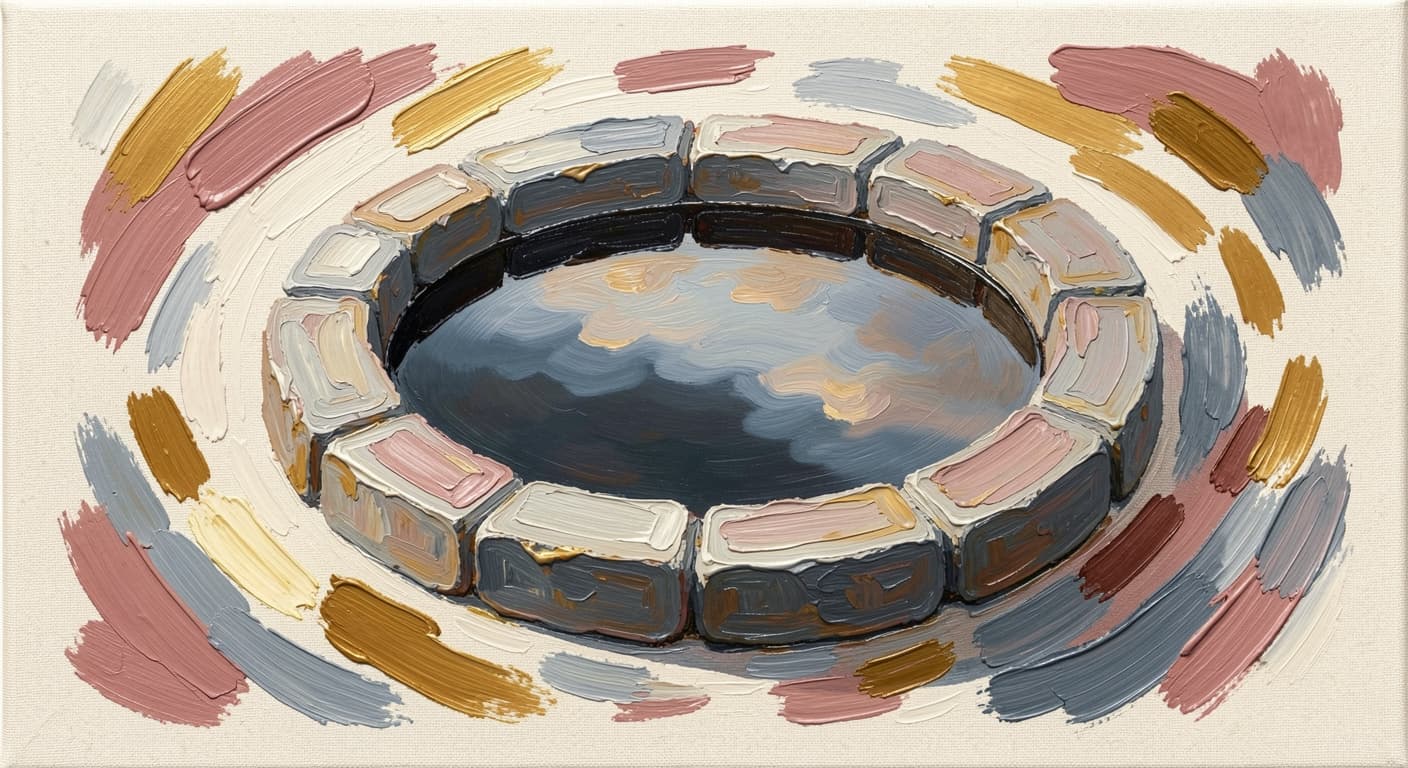
The third of the ten Hermetic powers is enkrateia (ἐγκράτεια), translated in Copenhaver's edition as Continence. It displaces akrasia (ἀκρασία) — intemperance, lack of self-mastery, action against one's better judgment. The pair is one of the more familiar in Greek philosophical writing, but the modern self-control vocabulary does not quite capture what the dialogue means.
What enkrateia actually is
In Greek philosophical usage, enkrateia names the capacity to remain within one's own command (the literal sense: en- = within, kratos = power, mastery). It is not the white-knuckled suppression of impulse. It is the condition in which the impulse has not gained the kind of hold over the soul that would override the considered position.
The contrast with the modern wellness reading is sharp. Modern self-control language tends toward struggle: resist the urge, exercise willpower, push through the desire. This implies a divided self in which one part fights another. Enkrateia is closer to a unified condition — one in which the divisions between considered position and active impulse have been brought into alignment, such that the question of resisting doesn't quite arise.
This is why the dialogue treats enkrateia as a power that enters rather than a virtue acquired through repeated effort. The repeated-effort frame produces the divided self; enkrateia names the condition in which the division has been resolved at a different level.
What akrasia names, in this frame, is not the failure of willpower. It is the condition in which the soul is divided — a considered position and an active impulse pulling in different directions, with the impulse winning. The dialogue's diagnosis is that the work is not to strengthen the considered position. The work is to address the division.
How the pair works as a lens
For reflective practice, the enkrateia-akrasia contrast surfaces a question that the modern self-control frame often misses: what is the actual structure of the division, and what would alignment look like?
The popular advice for repeated akrasia — eating when one had decided not to, drinking when one had decided not to, scrolling when one had decided not to — tends to recommend stronger commitment, environmental design, or accountability. These can help. They also frequently miss the underlying issue: that the considered position the practitioner is trying to enforce is not the position they actually hold.
Concrete example. A person decides repeatedly to stop a habit and repeatedly fails. The popular reading is that they need more discipline. The Hermetic reading would ask: is the considered position actually held, or is it a position they think they should hold? If the latter, the akrasia is not a failure of will. It is a signal that the position is not unified. The person has not yet decided what they actually believe; they have decided what they think they should believe, and the actual belief continues to act independently.
In this case, the work is not more discipline. The work is to find the position the person actually holds, name it, and then make the active decision from there. Sometimes this confirms the original decision (and the akrasia dissolves once the position is unified). Sometimes it reveals that the original decision was not fully theirs (and the right move is to revise it).
What the popular reading gets wrong
Two common flattenings.
Self-control as suppression. The modern self-control discourse tends to frame the work as resisting. The Hermetic frame is closer to the Stoic understanding (and the Confucian, and several other classical streams): the work is on the position, not on the suppression. A unified position needs little resistance. A divided position cannot be made stable through resistance alone.
Continence as deprivation. The popular reading sometimes treats continence as a kind of ascetic restraint — saying no to legitimate desire. The dialogue does not have this register. Enkrateia is not about denial. It is about being in command of oneself, which in many cases means acting with the desire rather than against it. The continent person is not the one who refuses; it is the one whose actions and considered position do not diverge.
How to use the lens in a session
Three concrete uses.
Diagnostic for repeated akrasia. When the same failure pattern keeps appearing, ask: is my considered position actually mine, or is it the position I think I should hold? The answer is often clarifying. The work that follows is sometimes confirming the position; sometimes revising it.
Counterfactual. If my considered position and my active behavior were aligned, what would I actually want, and what would I actually do? Often the answer reveals that the dispute is not between will and impulse but between two competing positions, both partially held.
As a diagnostic of unity. Where in my life are the considered position and the action already in command-with-themselves? Notice these. They are usually not the result of stronger discipline. They are the result of the position being genuinely unified.
If you want a structured form that draws this power as one of three classical lenses on a specific question, a Mirror Field session holds the dialogue's framing.
A small exercise
Pick a behavior pattern in which you have repeatedly failed at self-control. Without judging the failure, write three sentences:
- What is the position I think I hold about this?
- What is the position I actually hold, judging by my actions?
- If these two were aligned, what would the unified position be?
If the unified position turns out to be different from the position-I-think-I-hold, the work is on the considered position rather than on the resistance. Enkrateia describes the condition in which this work has already been done.
Sources
- Copenhaver, B. P. (1992). Hermetica. Cambridge University Press. ISBN 978-0521425438. [CH XIII §8, on enkrateia and akrasia.]
- Aristotle, Nicomachean Ethics VII. [The classical Greek treatment of akrasia, foundational for later philosophical use of the term. Standard translations: Irwin (Hackett, 1999); Ross (Oxford, 1925).]
You may like
Power 1: Ignorance to Gnosis
The first of the ten Hermetic powers in CH XIII drives out ignorance. What the dialogue actually means by *gnosis*, and how to use the contrast as a reflective lens — without the modern self-help flattening.

Power 2: Sorrow to Joy
The second of the ten Hermetic powers in CH XIII drives out sorrow. What the dialogue means by *Knowledge of Joy* — and why it isn't what the modern wellness vocabulary calls happiness.
Power 5: Injustice to Justice
The fifth of the ten Hermetic powers in CH XIII drives out injustice. What *dikaiosynē* meant in Greek philosophical writing — and how to use it as a reflective lens, not as moral self-policing.